the measure of love

Some people are less loved than other people.
A homeless man with no family and no friends is not loved by other humans.
He sits alone on the sidewalk. A few snowflakes fall around him. His gloveless fingers are cold.
A mother sits inside, warm, at the Christmas dinner table, across from her husband who loves her.
Her four children adore her. They giggle. Eli, the youngest, makes a mess of the mashed potatoes.
Her parents, proud grandparents, smile upon her. Her friends remember her birthday. This mother is more loved by other humans.
What tragedies separate them, the mother and the homeless man?

We are uncomfortable. We like to think about a God with infinite love – a God who loves the homeless man the same as the mother.
But could this be a way to absolve ourselves?
Aren't we supposed to ensure that the homeless man has as much love as the mother?
Deep down we sense that all human beings are infinitely valuable.
We’re supposed to be God's hands in the world. We’re supposed to ensure that every human has the love from other humans that they deserve.
Sometimes, what a homeless man needs – in addition to food and warmth and shelter – is a hug from a friend. When the snow is falling, he may want all those things more than the love of an invisible God.

On the tenth Christmas since the tragedies, Eli sits alone on the sidewalk, holding his own hands, looking up towards heaven.

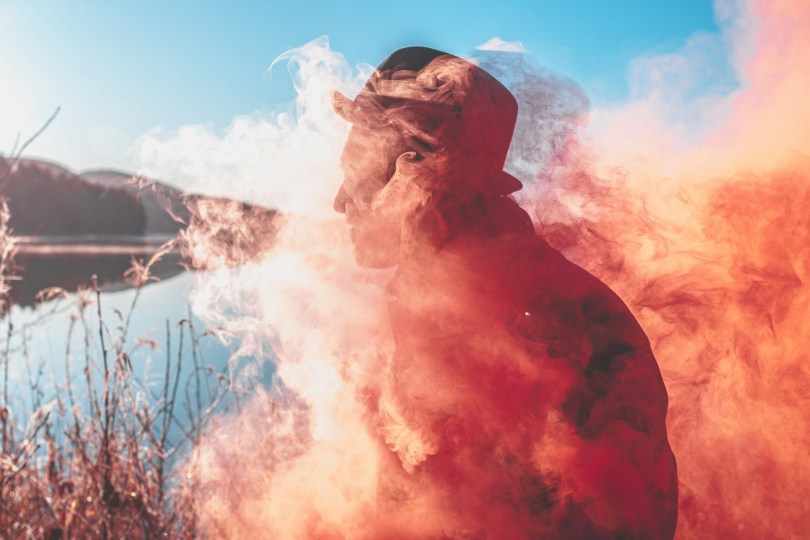
[Featured Image by Erik Odiin on Unsplash]

today

sand disturbed an ocean away
on a beach I shall never revisit
but the beach remembers my daughter's play
although we cannot relive it.

three coral fragments, two pink, one red
lost and found in a driftwood forest
but the sea remembers the day we left 
with salt on our skin and our whole lives before us.

because I walked once there, the sand stream has shifted
if I’d never lived, that sand would be different.
because I once stood there, the wind’s waves were parted
if I’d never been, the air would’ve drifted.
because I once smiled, laughed, joy blossomed within him
if I were not born, would you’ve smiled there instead?

we think of legacy, monument, history
names carved in gravestones
printed on pages
we think of the empires, rising and falling
emperors ruling
losing and lusting
we wonder if we’ll be remembered like they are
forgetting all of the emperors forgotten
the intrigue erased, the powerful vanquished
by decades or centuries, by minutes or seconds.

who is remembered by people, by places?
our atoms recycled, our atoms eternal.
who is remembered, in features, in faces?
unnatural selection, victorious and feral.

four million years since “we” walked upright
eight million years hence, will we know who rules?
what fragments of genes, yours or mine, will be trusted?
will Stonehenge remain? the pyramids? crown jewels?
certainly not that tower in Pisa
when will it fall? will the tragedy leave us?
will the Buddha be mentioned? the Christ-child Jesus? 
will the Mona Lisa hang in high honor? old Venus? Greek friezes? 
or if not: 
on what day were they archived, destroyed, or bereaved us?

the Earth will contain all our traces forever
magnesium from Plato and Genghis and Leo
carbon from Einstein, exhaled when he finished 
his theory which later will be old as Nero.

they say only god knows the hairs on my head
or the hairs in the drain, or the iron I bled
the cups, knives, and tumblers I’ll put in the landfills
(gone after centuries,
but still at risk daily
of becoming my longest material impression).

we make trash out of plastic and books out of paper
but shouldn’t it be the other way round?
what should we make all our books of? stone tablets? 
even that is unsure if the stone is unfound.
clay tablets from fewer than five thousand years off
contain the most ancient of stories not lost.

the body’s dissolved, but its influence lives on
the mind is dissolved, but its insights live on
walk the church yard entombing five thousand from wars
swim the sea, the grave of unnumbered once known
gaze at space, where few ashes soar for the stars.

I am overwhelmed by soft fingerprints on
the crust of the Earth. the heat death of the earth, 
the heat death of the universe.
but we are still here, living this way.
what of the morrow? they say
everything is now:
today.

[Featured Image: reconstruction of Ishtar gate, public domain]

the last song

Her voice was almost spent; this was her final performance. Her silk dress waterfalled to the floor, glittering with stars. She meandered across the third-floor interior balcony of the mega-mall, watching the people below speed around like a bunch of bag-laden beetles. Too many Christmas presents to buy. She passed the pianist, a man she had never seen before. She was so happy that she kissed him on the mouth, just before he began to play. The conductor raised his eyebrows at her but he understood; she had nothing left but her fame at this point.

The last performance began. “O Holy Night, the stars are brightly shining,” she sang, purifying the air with her lungs. They had given her permission to wander while she sang, carrying a microphone that gave her a portal into every shop in the mall. She headed down an escalator. “Long lay these words, in sin and darkness pining…” Some people waved excitedly at her from the opposite escalator. “To find a day when my soul felt its worth.” From this point in the mall, she saw escalators ascending and descending between all six floors. She loved open space. The glass roof afforded a wonderful view of the evening sky.

“A thrill of hope, the weary mind rejoicing.” The lowest level was empty. She stood on the smooth white tile, a beam of light against the storefronts, and sang the highest note to a bedraggled homeless person covered in red rock powder from the quarry. “O night, diviiine; oh night; oh night divine.”

He clapped for her and she smiled, then took the escalator back to the top for the reception. There was a third verse that she had not bothered to learn the words to; it was written by some modern person with no taste. She sang, “I don’t know the words, so I will sing the first verse; it is the night of our dear Savior’s birth.” Nobody would care at this point; the pianist was also improving; they were already clapping from upstairs. “Oh, night, divine.” Pure and clear till the end. She had calibrated her reserve exactly.

She stepped onto marble. Cameras flashed. The conductor was crying. The pianist she had never seen before saluted her. Her sister came up and said, “That was wonderful!” and she croaked her last words, a shallow rasp so quiet only her sister could hear: “Thank you.”

After the farewell, they took her by the arm and led her into a side room. Before this moment, she had prayed that the next model would enjoy the newer version of her larynx as much as she had enjoyed her outdated one, so she was at peace as she caught her last glimpse of Venus through the ceiling glass: the brightest evening star, and it wasn’t even a star.

[Featured Image: starry night, drawing, public domain]

carne vall

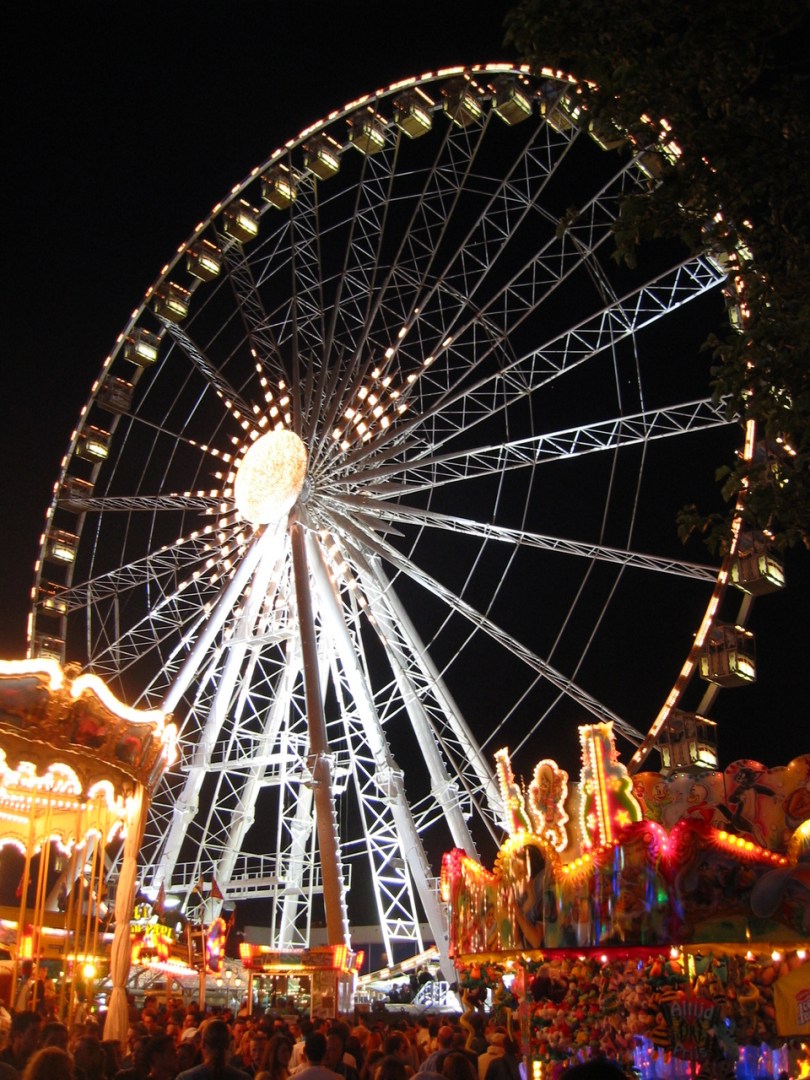
don't take me up into that ferris wheel cage over the water because all I will think of is falling and landing in the water in the cage and drowning and 
a carnival is no place for Death
although She loves to eat the corn dogs, pick at the cotton candy, luck out at the cardboard shooter, win a stuffed animal
Death takes no breaks
Her eyes are always in the crowd
Her hands are always busy
She rides the Ferris wheel and takes in the world with one bubblegum swallow

[Featured Image: Roue de Paris. Public domain]