when you are in medicine,
medicine is the world.
when you leave medicine,
the world becomes the world.
and the world feels vast
and you feel small
but you feel like you can take it all.
[Featured Image from Wikipedia, Creative Commons license]

when you are in medicine,
medicine is the world.
when you leave medicine,
the world becomes the world.
and the world feels vast
and you feel small
but you feel like you can take it all.
[Featured Image from Wikipedia, Creative Commons license]

The Brazilian store occupied the leftmost lower corner of a two-story strip mall. Somehow, every time we went, it was raining. Puddles in the parking lot, yellow hatch-marks of rain under every streetlamp, blue-purple clouds swollen with rain, rain drawing out the warmth of the store’s yellow lights. Paper advertisements printed in Portuguese plastered the inside of the glass windows. The only English I saw glared off the faces of prepaid phone cards.
The best part of the Brazilian store was the candy case, and the best part of the candy case was the stack of dulce de leche bars. If you’ve ever had dulce de leche – a type of caramel – you know it’s sweet. Dulce de leche bars are the result of magically solidifying dulce de leche so that it’s even sweeter – so sweet that it makes your tongue tingle, as if you’ve dipped it into thousands of tiny sugar pearls and your brain can’t handle all the sweet as the pearls roll around.
As a child, happiness was sitting in the backseat of the van, watching raindrops race each other across the window, and every now and then taking a bite of a dulce de leche bar.
[Featured Image from Wikipedia, Creative Commons license]
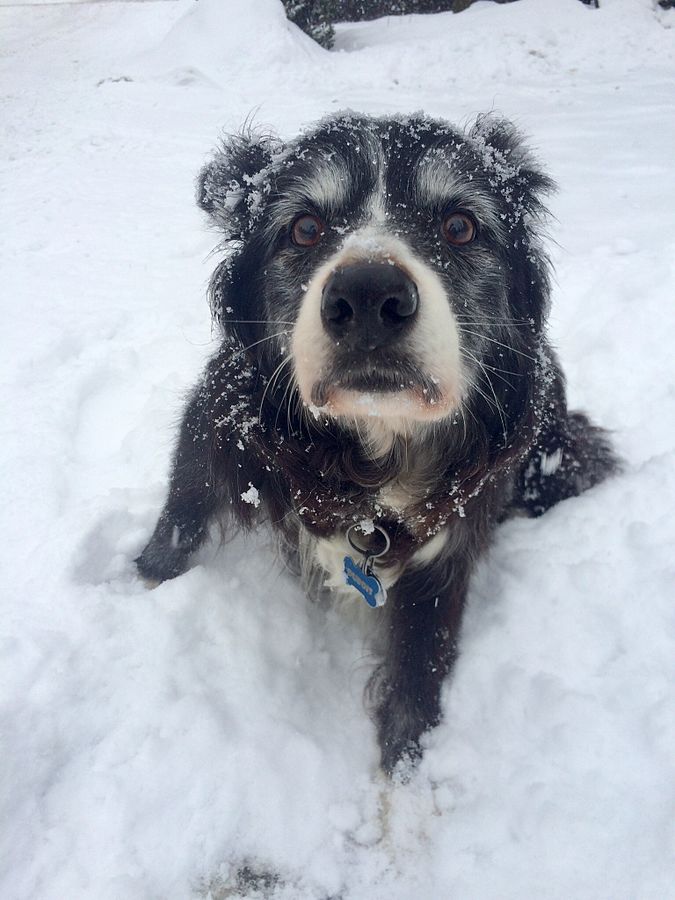
I walk out of the terminal into the slush. This gray place isn’t cold enough or desolate enough to be pretty.
People in puffy jackets and scarves crowd the curb, waiting for rides. Chittering-chattering. I remember how to speak their language, even though the last time I was here, I had barely learned to speak. I yank my cap as low as it will go. The lobes of my ears are still freezing.
My eye catches on a man. I’m not interested in him; I’m interested in the crate of puppies at his feet, and the sign he’s holding that says, “Take Home a Christmas Puppy.”
What kind of monster sells puppies at an airport?
I walk over to the monster to mess with him. “This is departures,” I say. “Doesn’t it make more sense to sell a puppy at arrivals?”
“I suppose it does.” He looks me up and down. I think anyone with eyes could tell I have nice curves even under this jacket. His eyes fixate on my face. “Where are you coming from?”
“Somewhere colder than this, believe it or not,” I say. “You could also sell the puppies at the ice-skating rink downtown, if that’s still around. There are a lot of kids there. Maybe they can harass their parents into buying one.”
“That’s a good idea too.” He lowers the scarf over his face and I can see that he has black stubble on his chin. “So, what brings you to the worst city in the world?”
“I used to teach geometry, but I quit my job. Now I’m homeless and my boyfriend left me.”
His eyes go wide.
“Just kidding!” I say. “Maybe I’m the kind of criminal who smashes up car windows. Well, the only true thing I can tell you is that I’m starving.” I look over at a vending machine advertising Godiva chocolate-covered strawberries. What kind of place has Godiva chocolate for sale through a vending machine – outdoors? How long can a chocolate-covered strawberry stay in a vending machine without going bad? Who’s going to pay six dollars for a piece of fruit that comes out of a vending machine?
The puppies whine and paw at their crate. An elderly woman walks up wearing gold circular glasses. Snot drips off the end of her nose. “I love puppies,” she says. “I’ll take them all. My Fifi died last week and Torro died the month before so I need dogs in my life again.” She made a tutting sound of disapproval. “Selling these beauties in an airport of all places! I have never seen such a thing.”
“You promise to take good care of them?” said the man.
The woman takes out her wallet and slips out a couple of crisp hundreds. I lean over, not caring that she gives me a dirty look, and see that she has several more hundreds in her wallet. “I’ll give them a life of luxury,” she says.
The long-faced man stuffs the cash in his pocket, picks up the crate, and holds it out towards the woman. She claps her hands and a young man in a suit jogs up pushing a luggage cart already piled high with brown leather designer bags. He puts the crate of puppies on the top of the luggage stack. “Gently, gently!” the rich lady huffs. Two minutes later, they’ve disappeared into the parking deck across the street.
I look at the man, now without his puppies but two hundred dollars richer. He takes a ticket out of his pocket. “Well, that’s a third of the cost, I guess.”
I raise my eyebrows at him.
“I’m supposed to be in the air right now,” he says. “Been planning this trip for months. North Sentinel Island. But on the walk here I saw those puppies in a ditch…Too far to walk to the animal shelter. Too busy to get a cab. Figured I’d sell the puppies because people always assume things are more valuable if they’re for sale.” He straightens his hat. “Well, hopefully that lady takes care of them.”
What kind of a person walks to the airport?
“When’s your flight?” I say.
“An hour ago.” He twirls the ticket around, like a cheerleader’s baton passed from one finger to another. “I wanted a sign telling me I should stay here and I got one.”
I snort. “I wanted a sign telling me I shouldn’t come here, and I never got one, and so here I am.” A car passes by with a geometric bumper sticker. “Huh. A hendecagon. I haven’t seen one of those in a while. Eleven never fits anywhere.” But the universe would fall apart if somehow eleven stopped existing.
I start to walk away, in the direction of the hendecagon-emblazoned car. “I wasn’t lying about being a car thief, by the way. But it was just one car, just one time. My ex-boyfriend’s car. To get to the airport.”
[Featured Image from Wikipedia. Creative Commons license]
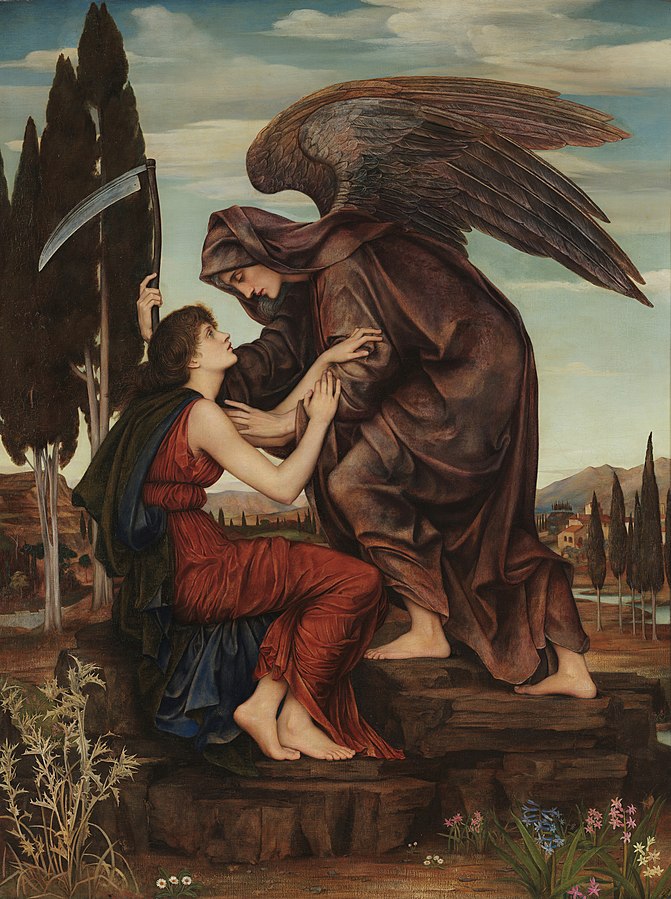
I ask him if they have lamb anywhere and he says, “I think there’s ground lamb past the ground beef.” I look at the man once and then I look at him again, harder, and in that moment I know he looks exactly like one of the main characters in a sci-fi trilogy I’ve been writing for several years. Do I take a picture of him?
My heart is pounding. I try to figure out why he looks exactly like this character I’ve only imagined. He has light brown hair, a straight nose, a square-but-not-too-square jaw, and…damn, there aren’t enough words for face shapes, are there? Besides, it isn’t only his physical appearance, it’s his manner – good-natured, easygoing, with a smile that lights up his face as he talks with another customer. I stare at the ground beef and wonder if I’d be capable of taking a picture of him, subtly, from somewhere behind the shrimp freezer. I push the cart over and get my phone out, but my 1-year-old daughter immediately tries to take the phone from me and I give up, my cheeks burning.
The rest of the grocery shopping trip passes in a blur. I describe the items I’m putting into the cart to my baby as I go over again and again in my mind how the conversation will happen: I’ll walk back to the meat counter and say, “This might be the strangest thing anyone ever says to you, but, I’m a novelist and you look exactly like one of my characters – can I take a picture of you?” I imagine him going home and telling his girlfriend the story, amused and secretly flattered. I imagine him telling the story for years to come, at parties, with a solo cup in his hand – “One time this lady in the store said I looked like her book character and took a PHOTO of me!”
I put too much cheese in the shopping cart. No, he’s going to think I’m flirting with him. I’m happily married! He can see I have a baby and a ring…but he still might think I’m flirting with him. I’m not! I just really want a photo of my character!
The shy side of my mind slows me further, with memories of the time I saw the first Harry Potter movie and how the film erased all the subtleties of the characters I had imagined and replaced them with the faces of the actors. What if the man behind the meat counter doesn’t look as much like my character as I thought? What if I have this photo and slowly, over time, it diminishes the character somehow? I went to a wedding once and had a single bite of filet mignon that to this day was the best meat I’ve ever tasted – somehow the texture of butter but the taste of beef. Maybe it’s better for this experience to become a memory, and I can remember him the way I remember that filet mignon, instead of as a collection of pixels. Plus if I don’t take his picture I won’t have to blush or wonder if it’ll hurt my husband’s feelings when he sees the photo on my phone and asks for the story.
So I don’t take his picture. I’m not sure if I will ever see my character in the grocery store again. It’s a Wednesday night; maybe, somehow, he always works Wednesday nights. I tell myself that if I see him again, I’ll be bolder.
[Featured Image from Wikipedia, public domain]

with two hands
I agonize over the blank calendar,
the pressure of the tomb.
Keyboard keys pop off with overuse.
The bird dies after flinging itself at its own reflection,
nowhere sacred to rest.
I stare at
the spiderweb in the window
sandwiched between two panes of glass
what pains the widow?
Her life is filled with purpose
To create:
a threaded glass tapestry
every morning anew
a harvester and a home.
Eight eyes,
frontward facing,
have seen enough
and
just enough.
Only the ruler of the dominant
can master the morning breeze
and not mind the matter.
[Featured Image: Spider, Creative Commons license]

I have spent my entire life on trains. I’m not sure if it’s a life or an afterlife, because I never seem to get anywhere and nobody seems to notice me. I have no home, no money, and only one outfit. I’ve never used a private bathroom. I don’t remember my childhood or if I was ever any younger than I am now. I don’t think I have ever given birth to any children myself. I would probably remember that if it had happened.
The trains come and go at a convenient speed for me to avoid getting caught. Here’s how it works: after getting off the last train, I dart about the station, staying in the shadows and back hallways, and occasionally stealing food and water from the little shops lit with yellow lights. When the next train comes, I stay hidden in the crowd until the train starts to pull away. Then I run and leap up onto one of the open cars. There are only ever two kinds of cars on trains: closed cars, for people with fancy tickets, and open cars, which are just platforms of seats open to the wind and rain. The ticket collector never checks the open cars. I know I have to keep moving to keep ahead of the people who are chasing me. I’m not sure why they are chasing me but I know if they ever catch up, I might end up on the tracks.
The first time I see Steven it is a cloudy day with bright light pouring through the glass dome that forms the roof of this station. I leap onto an open car and turn and see someone as bedraggled as myself, except handsome instead of beautiful. He seems to know we are the same and looks surprised.
“Who are you?” he says.
“I tell people my name is Sandy but I don’t really know what it is,” I say.
“Steven,” he says. He has sharp eyes, the kind that don’t miss much, and a mouth that looks like it’s smiling at the world—with mockery or amusement or both.
That is it. The station where I leave Steven is a dim one—too few windows, too many people, all of them smelly and wearing long coats. At that dim station, I get off and he stays on and I think I will never see him again except in my mind several times a day when I wonder what he is doing and then why I can’t stop thinking about him.
The second time I see Steven, the chasers are close behind me. I hear their shouts and the barks of their dogs. I leap off the wood-slat platform and into an open car with white plastic seats. Sweat pours off my brow but now the train is accelerating too quickly for the chasers to get me and I watch them recede into the distance, standing angry at the station as I escape for the hundredth or thousandth time.
I pull myself into the seat to catch my breath.
“You again.”
I turn around and Steven is sitting right behind me. He is wearing the same outfit, same as mine: brown shirt, brown pants, and brown leather jacket with a little bit of filling. Everyone in the open cars wears brown but Steven is the first person who’s ever talked to me.
“Maybe we’re sharing the same dream,” he says. “Or maybe we’re sharing the same hell.”
I climb over my row of seats to sit down next to him. It’s cold outside and he puts his arm around me. I enjoy the warmth. I’m always cold these days. I wish I had one of those beaded outfits that I see the ladies wearing in the stations sometimes. They’re glorious silk dresses with embroidery and long trains and millions of glass beads sewn on in patterns. They must weigh a ton. All of them come with chandelier hats, where a central post supports a chandelier that dangles over the wearer’s head, colorful beads glinting in the light. The only problem is that the chandelier hats are screwed straight in to the bones of the skull so they can never be removed, and the dresses are sewn into the skin as well. I like sleeping at night without anything stuck to my head and I like to be able to take my clothes off but I still wish someday I could try one of the red and gold dresses with velvet layers and long sleeves—if there were a way to get rid of it afterwards.
I tell all of this to Steven and he says, “You don’t want to be like the crowds. They’re beyond us. They don’t even remember how to speak. I think if we find the right station, we’ll remember who we are.”
“Is that what you’re doing?” I say. “Searching for the right station?”
He pulls out a napkin. I recognize the logo on it. It’s from one of the sandwich shops. On the napkin is a list of names. “These are all the stations I’ve visited. I never go back to the same station twice. I keep south and figure if I always go the same direction I’ll either have to end up somewhere new or back where I started.”
I squint at Steven. He smells of nutmeg and I suddenly remember standing with him in a kitchen and there are pumpkin pies in the oven and the sound of a child laughing.
“We have a daughter,” I say. As soon as the words come out of my mouth, I know they are true.
Again, Steven looks at me with the same surprise he wore when he first saw me.
Panic floods my entire body. Where is my daughter? There is nothing more important than finding her. But somehow, I know, she’s far away—not in this world, not in this universe. We are in separate glass baubles hanging on some cosmic Christmas tree. Christmas—that’s something else I remember.
“You used to play soccer,” Steven says.
As he says it, I see a soccer ball flying through the air towards me.
We’re at the next station already. The countryside sailing by has been replaced by a station with red columns and hanging banners. The chasers are already upon me. They’re in the same train car as I am, which is a first. They’ve never been this close to me before. As I run away, tears stream down my face, because I have lost something, and when I glance backwards through the crowd, I see the train carrying Steven away. Tears are on his face too, as he writes the name of the red-columned station on his napkin and holds it up to me.
Now I wander through the red-columned station for days. I watch the trains come and go. I wonder where the chasers are. The horrible thought strikes me that maybe they were after Steven all this time and not me, and if that is true, it means they probably got him—right?
I study the crowds more carefully now and realize they are all puppets. Their strings hang from the clouds and they move with vacant smiles and stiff hands, eating like machines, never speaking. There are no children anywhere. I take a closer look at the ladies in the beaded dresses and realize that the dresses are holding the ladies together. The ladies are made of so many disparate parts, and the seams that bind the dresses to the skin are actually binding the skin together too. I don’t want to fall apart like that but I feel like I am going to.
It storms. Now that I think about it, the weather has always been cloudy since I arrived. Day and night they are the same clouds, never permitting any blue sky, never releasing any storm—until now. Rain pours out of the sky and patters on the ridged metal roof of the station.
The next train that comes is dilapidated, with rotting wood and no lights on in the closed cars. It smells of mold and decomposing flesh. I leap onto it and head out into the storm.
When I get to the next station, I see that it has been constructed over water, and the sky is weeping into the waves. The rotten train is scaring me so I disembark and wait among many motionless beaded ladies laying in piles. Someone has left them here to grow algae and barnacles. The next train is a standard line. Line Two, I call it, because every car on this train has the number two painted on its side. I get in.
The Line Two train whisks me up on high tracks that pierce the clouds. It is sunny now. I hear someone calling me. They are three or four cars back. I will have to jump between the cars to reach them. “SANDY! SANDY! SANDY!” The cry is repetitive, like a bird’s. I start weaving through the white plastic seats and the wisps of clouds as the sun blinds me, and I jump from one car to the next like a lemur, and then when I see Steven at the very end of the very last car, I sit up.
The metal room around me bends and twists as my eyes focus on separate parts of it in order, not together. Red lights are flashing. An alarm shrieks. I put a hand to my head and feel blood.
Steven is standing over me. I see his uniform. First Officer. “Captain! Our ship’s been hit!”
“Evacuate,” I say.
I make the announcement and enter the command code to open all the escape pod inner doors. Steven and I are the only members of the bridge crew who survived the initial impact. The bridge escape pod has been destroyed, its white plastic seats blown to nothing along with half the bridge. I wasn’t going to leave my ship anyway, but maybe Steven could have.
I hobble over to the translucent yellow force field that’s sealed off the blown-up wall of the bridge from the starlit vacuum of space. Steven is beside me. We don’t have a daughter. I never told him how I felt about him.
I watch the Parrathian ship in front of us fire blue shots at our escape pods to slaughter our technical crew and passengers one by one. The weapons systems are down otherwise I would be giving them every charge we have left.
I turn to Steven. We’ve both seen the missile streaking towards what remains of our ship, roaring silent on a blue ion tail through the emptiness of space to finish us off.
Steven looks at my expression and then gives me a hug that turns into a hold. “Maybe we’ll end up together in the same hell,” he whispers.
“Or the same dream,” I say.
[Featured Image from Unsplash, free to use]
it doesn't have to be good
it doesn't have to be there
it has to be perfect
it has to be here
I march in a straight line and imagine myself dancing
I save in a mason jar and imagine myself spending
the silver rolling out of my hands into the spotlight
I sit at the bus stop and imagine myself running
suit top comes off, shoes come off, briefcase spills open in the wind
I don't even own a briefcase
I am the briefcase
I want everyone to read my papers
I keep them under lock and key
it has to be numbered
it has to be divided and tabbed
I brush my hair and ponytail it
imagining it dyed blue and horse-wild
I think I'm in the west but my lap and folded hands are in the east
port is starboard
the ship is in a museum, curated
smash its hull with a red fire extinguisher
read me
get arrested.
when the ship is rebuilt from new wood under the same name,
with the same birth certificate
is it still the same ship?
what do I fear more:
death
or rebirth
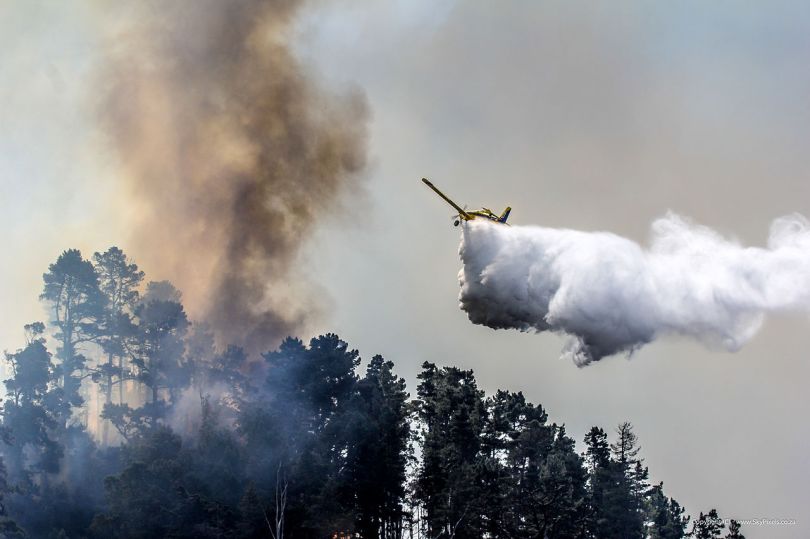
[Featured Image: a firefighting aircraft. Creative Commons license]

the asphalt in summer is so hot it burns bare feet, it returns to tar
the car dash radiating egg frying mirages
the ice cream truck languid, its tune pushing through the heat, its interior dripping with icicles
the skirt I wear has many layers of itchy netting
my church shoes are too small
one of the buckles is broken
I leave a forehead smudge on the car window as we drive past the ice cream truck up the hill towards the congregation
nobody worships the sun
perhaps that is why the sweat hisses on the sidewalk and the potato bug husk burns
She demands
and we sing hushed hymns in the dark.
[Featured Image: Nave and organ of the Cathédrale Sainte-Cécile d’Albi. Creative Commons license]
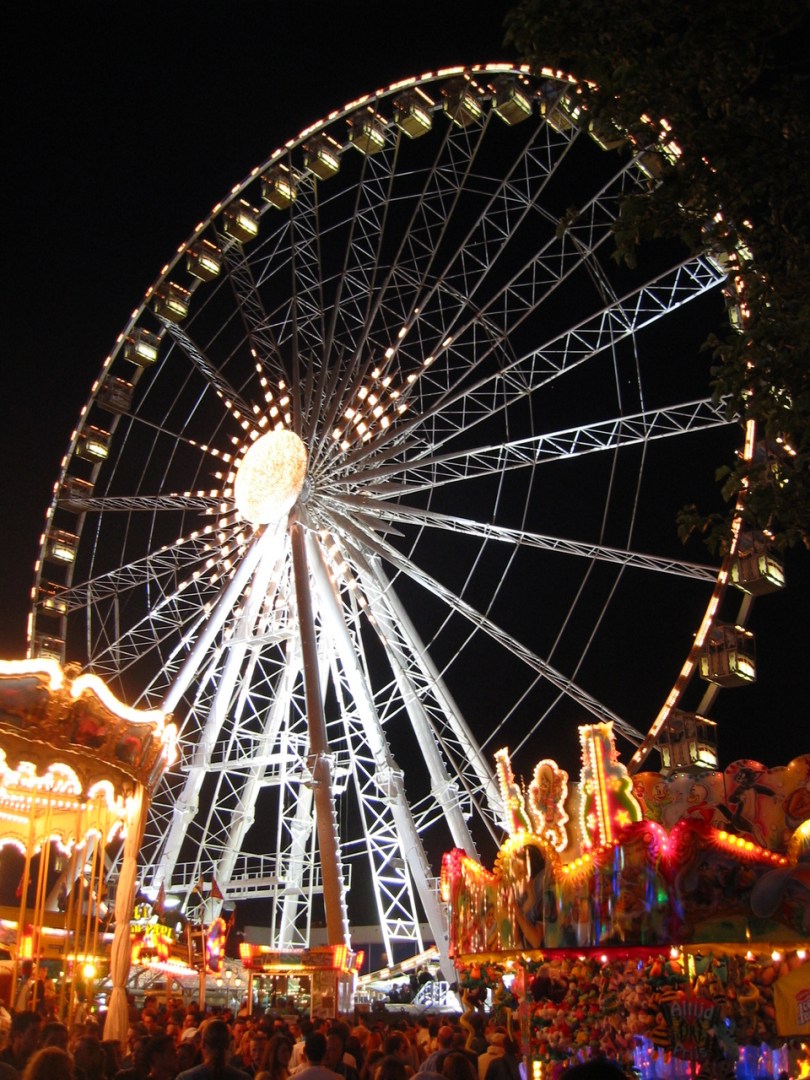
don't take me up into that ferris wheel cage over the water because all I will think of is falling and landing in the water in the cage and drowning and
a carnival is no place for Death
although She loves to eat the corn dogs, pick at the cotton candy, luck out at the cardboard shooter, win a stuffed animal
Death takes no breaks
Her eyes are always in the crowd
Her hands are always busy
She rides the Ferris wheel and takes in the world with one bubblegum swallow
[Featured Image: Roue de Paris. Public domain]

All the wishes bottled up
You can let them loose like champagne
You can launch them like coke mentos
You can label them in handwriting
In tight curls of ink on white stickers
The bottles go in the cellar
Nestled in criss cross wood
Overanalyzed
Overdue books
All the pages in the bubbles are dog eared
You might get lucky
You might taste one wish
[Featured Image: Centre Avenue Bridges, NY. Creative Commons license]
 balladrael


.jpg#mw-jump-to-license)
